Where the Material Came From
The raw material for nearly every jungle track made between 1992 and 1996 was a small set of recorded drum breaks, pressed onto vinyl and circulating on compilations sold explicitly to producers. The Amen break — a six-second drum solo recorded by Gregory Coleman for The Winstons' 1969 B-side "Amen, Brother" — became the genre's foundational loop. The Think break, from Lyn Collins's "Think (About It)" produced by James Brown, ran it close. Both were recorded live: imperfect in timing, with snare hits that bleed, cymbals that splash into each other, kick transients that compress unevenly. That imprecision was the point.
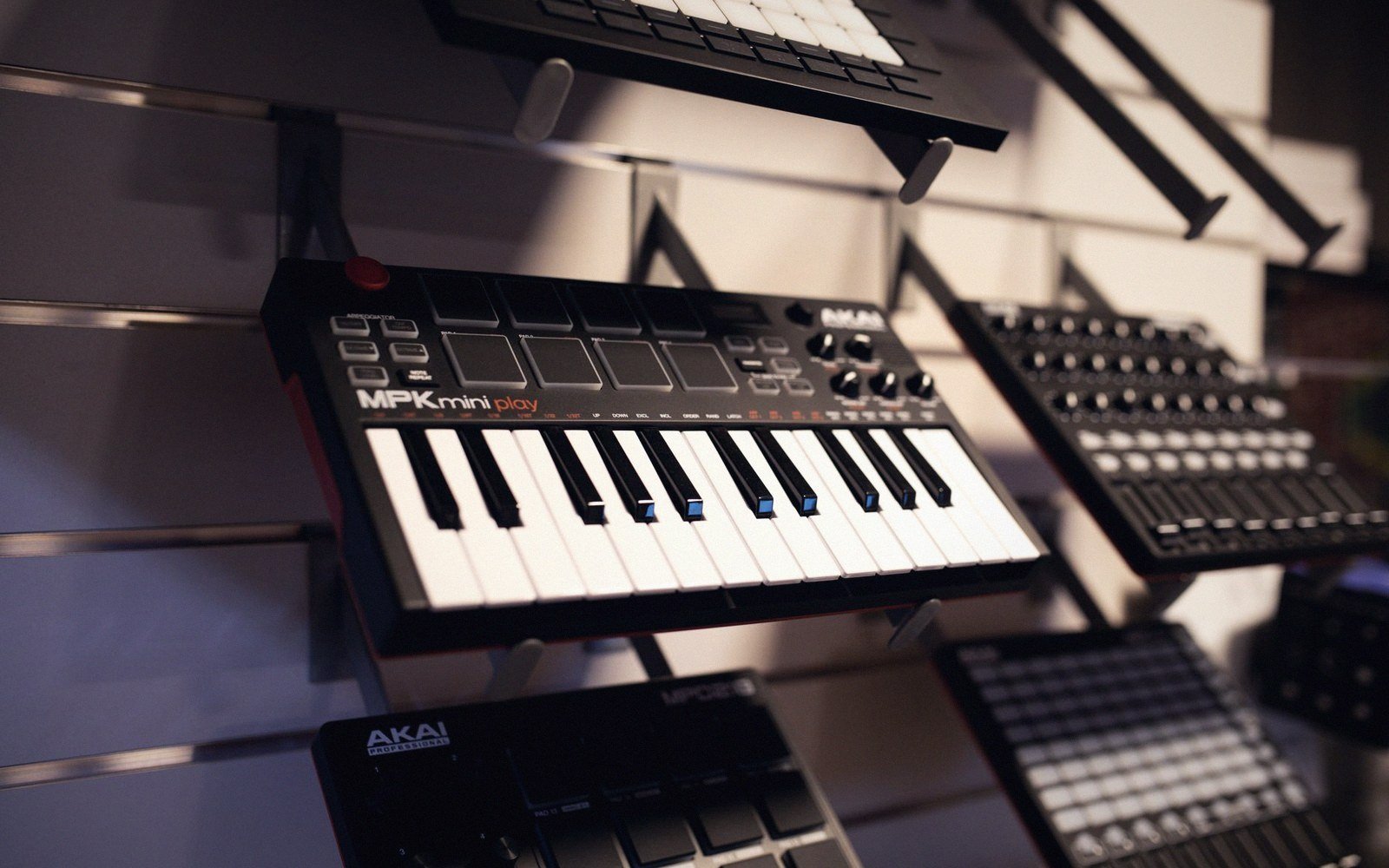
Loaded into a sampler — most commonly a Roland S-750, an Akai S1000, or lower in the budget chain an Akai S950 or S900, whose 12-bit converters added their own granular character — the break was not simply looped. It was dissected. A producer would isolate individual hits: the snare at bar one beat two, a ghost note on the hi-hat, a kick fragment. Each slice became its own sample, mapped across the keyboard and repitched.
The Metrically Unusual Result
Repitching a drum hit changes its speed. Transpose a snare sample up a minor third and it gets shorter as well as brighter; down a fourth and it slows, thickens. Jungle producers used this relationship deliberately. The snare hits in a jungle break at 160 BPM might include samples pitched to four or five different positions, each one a slightly different length. Quantised grid sequencing — the default in a DAW-era workflow — would have ironed this out. Instead, on trackers or the step sequencers native to the hardware, those micro-length differences stayed. The bar does not divide evenly.
Each slice became its own sample, mapped across the keyboard and repitched.
The standard jungle drum pattern runs at tempos between 155 and 175 BPM, but the underlying rhythmic feel is not simply a fast 4/4. The bass drum rarely falls on the downbeat in any predictable way. Kicks are staggered, appearing in groups of two or three sixteenth notes that shift position across bars. The snare, rather than holding beats two and four, operates more like a syncopated percussion instrument borrowed from breakbeat funk — because that is exactly what it was. The result is a metric ambiguity that house and techno, both anchored to a kick on every quarter note, do not produce.
Stretching and Pitching Without Clean Tools
The absence of clean time-stretching tools mattered structurally. Today, time-stretching separates pitch from tempo; in the early 1990s, hardware samplers offered no such facility. If a producer wanted the Amen at 170 BPM and had recorded it at 138, the only options were to repitch the whole loop upward — raising tempo and pitch together — or to cut every individual hit and reassemble them in the sequencer at the target tempo. Most jungle producers did the latter, which is why the drum sounds in the genre have an internally inconsistent character: each slice carries different compression, different ambience, different pitch offset.
The layering compounded this. Two or three different breaks might run simultaneously, each sliced differently, their individual hits occupying different frequency registers. A snare from the Amen might be reinforced with a snare from the Think break pitched down, giving a flam effect that was not programmed as a flam but was an artefact of timing offsets between layers.
The rhythmic texture that defined jungle as a genre was therefore substantially a product of technical limitation and manual labour at the sampler keyboard — not an abstract compositional choice, but a physical consequence of the tools and the time it took to use them.