Acid house is not built around a bassline in the way a soul record is, where the bass sits beneath the arrangement and holds it together. In acid house, the bassline is the arrangement. Everything else — kick drum, hi-hats, the occasional stab — exists to frame what the Roland TB-303 is doing at any given moment. Understanding that inversion is the key to understanding why the genre sounds the way it does.
The 303 was designed in 1981 as a practice tool: a bass accompaniment device for guitarists who couldn't afford a session player. It failed commercially, was discontinued by 1984, and ended up in second-hand shops across Chicago and, shortly after, the UK for next to nothing. What producers discovered — first in Chicago, then in Manchester, Sheffield, and London — was that if you programmed the machine in ways it wasn't designed for and pushed its resonant filter into self-oscillation, it produced a sound that had no precedent in recorded music. What the 303 actually does to its filter and accent circuit explains the circuitry; what matters here is how producers arranged around it.
Sequence, filter, accent: the three moving parts
A 303 sequence is typically sixteen steps. Pitch, gate length, slide, and accent can all be set per step, and the interaction between those parameters — particularly slide (portamento between notes) and accent (a voltage boost that opens the filter further and increases volume) — creates the characteristic burbling, nagging motion that defines the genre. The sequence is not a melody; it rarely resolves, rarely changes key, and often returns to the same one or two notes repeatedly. Its interest is textural and rhythmic, not harmonic.
The filter sweep is usually the primary structural device in an acid track. The cutoff frequency of the 303's low-pass filter is controlled either by the machine's own envelope (triggered by accent) or by an external control voltage, and sweeping it up and back down over sixteen or thirty-two bars creates a natural arc — tension and release — that replaces what a conventional track might achieve through arrangement: a chorus arriving, a breakdown resolving. In many British acid tracks from the late 1980s and early 1990s, the filter sweep is the only macro-level event in the first three minutes.
Accent placement is the detail that separates the more interesting sequences from the mechanical ones. Accents on offbeats, or placed asymmetrically against a four-on-the-floor kick pattern, create polyrhythmic friction: the filter opens in places that conflict with the drum grid, and the ear reads that as energy rather than error. Producers working with the 303 quickly learned that accent patterns, not note choice, were what made a sequence compelling over extended play.
No multitrack session work, no arrangement software, no session musicians.
Arrangement by subtraction
Because the 303 generates so much internal motion on its own, acid tracks tend to be arranged by addition and removal rather than by development in the conventional sense. A typical structure might run: drums alone, then 303 with filter mostly closed, then filter gradually opened, then drums stripped back to let the sequence dominate, then both running together at full resonance, then a sudden mute of the bass entirely — silence where the bassline was — before its return. The mute is as structural as any breakdown; the ear, conditioned to the 303's constant motion, registers its absence as a physical event.
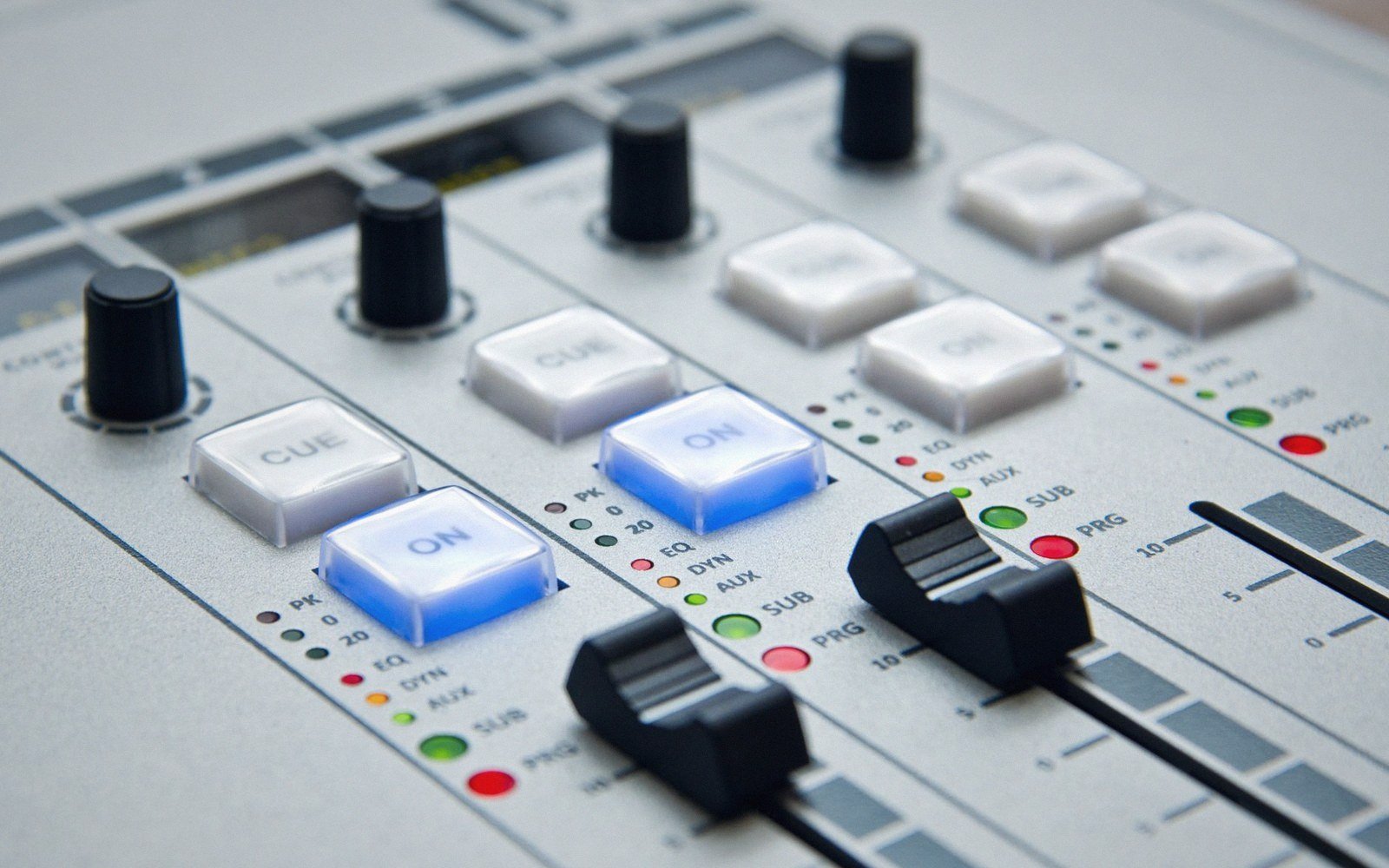
This approach suited the independent label context precisely because it was achievable with minimal equipment. A 303, a drum machine, a mixer with a simple EQ, and a reel-to-reel or DAT recorder were sufficient. No multitrack session work, no arrangement software, no session musicians. The music was built from a single instrument's behaviour, and the producer's job was largely to decide when to let that behaviour breathe and when to constrain it.
What British producers added to the Chicago template was, broadly, a harder kick drum and a more compressed, industrial edge — the influence of house music's overlap with early techno was audible in the drum programming. But the central logic remained unchanged: the 303 sequence runs, the filter moves, and everything else responds to it.