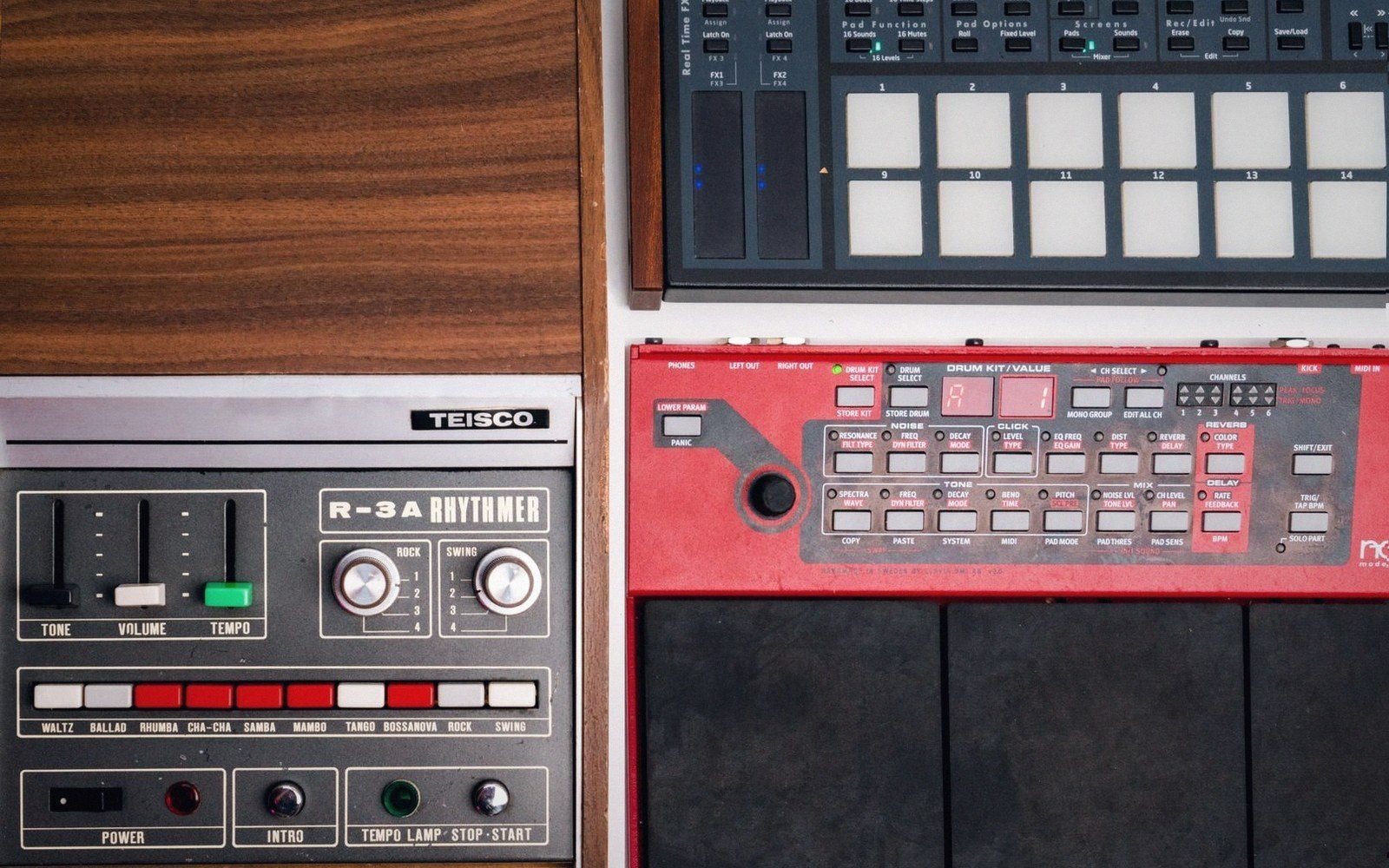
The Arithmetic of Imperfection
A sampler converts sound into numbers. The bit depth determines how many steps are available to describe any given moment in the audio — and at 12 bits, that is 4,096 steps. CD audio uses 16 bits and 65,536 steps. The difference is not subtle. Where a 16-bit system can represent quiet passages with fine resolution, a 12-bit machine runs out of steps in the lower amplitude regions, and the gap between what the audio actually was and what the number can express becomes audible. That gap is quantisation noise: a coarse, granular hiss that sits underneath the signal and thickens it.
This is not a flaw in the sense of a manufacturing error. It is a structural consequence of the arithmetic. What changed, historically, was not the flaw itself but what producers chose to do with it. When the Akai S950, the E-mu SP-1200, and the Ensoniq Mirage were the machines in the room, you worked with the noise or you stopped working. Most producers worked with it, and in doing so built it into the sound.
Three Machines, Three Characters
The E-mu SP-1200 is the most discussed case. Its 12-bit, 26.04 kHz sampling rate produces a particular compression of the high-frequency content — cymbals and snare tops lose their air and gain a paper-like density. Drum breaks sampled on the SP-1200 have a crunch that comes partly from the quantisation noise floor and partly from the aliasing introduced when high-frequency content folds back into the audible spectrum at a sampling rate that cannot fully represent it. Aliasing is normally the enemy; here it became textural, adding a harmonic shimmer to transients that is difficult to replicate cleanly.
Most producers worked with it, and in doing so built it into the sound.
The Akai S950 operates at 12-bit with selectable sampling rates, and its character is noticeably different: the noise floor is present but rounder, and the filter circuitry on playback softens the hard aliasing edges that the SP-1200 leaves intact. Producers working in the early UK jungle and hardcore scenes used the S950 heavily, and its handling of pitched-down breakbeats — where the noise floor descends with the pitch — contributed to the murky low-end density of mid-period hardcore.
The Ensoniq Mirage, an earlier and cheaper machine, sits at 8 bits in its raw mode, which places it in a different category of degradation altogether — closer to a lo-fi effect unit than a utility sampler. Its noise is aggressive enough that it functions as a colouring device more than a faithful reproduction tool.
Memory constraints shaped technique as much as bit depth did. The SP-1200 offered around 2.5 seconds of sampling time at full quality. Producers chopped breaks into the shortest usable segments, triggering them in sequences rather than playing long uninterrupted loops. The constraint produced the edit, and the edit produced the genre's rhythmic vocabulary.
Texture as Inheritance
What is striking in retrospect is how thoroughly the 12-bit noise floor became inseparable from the music it underpinned. Jungle, early UK hip-hop production, and the rougher edges of braindance all carry it. Modern producers who want that character face the same problem as anyone emulating what the 303 actually does: the numbers can be approximated, but the specific interaction of analogue signal path, conversion circuitry, and noise floor is a physical system, not a setting.