The Noise Burst, the Gap, and the Tail
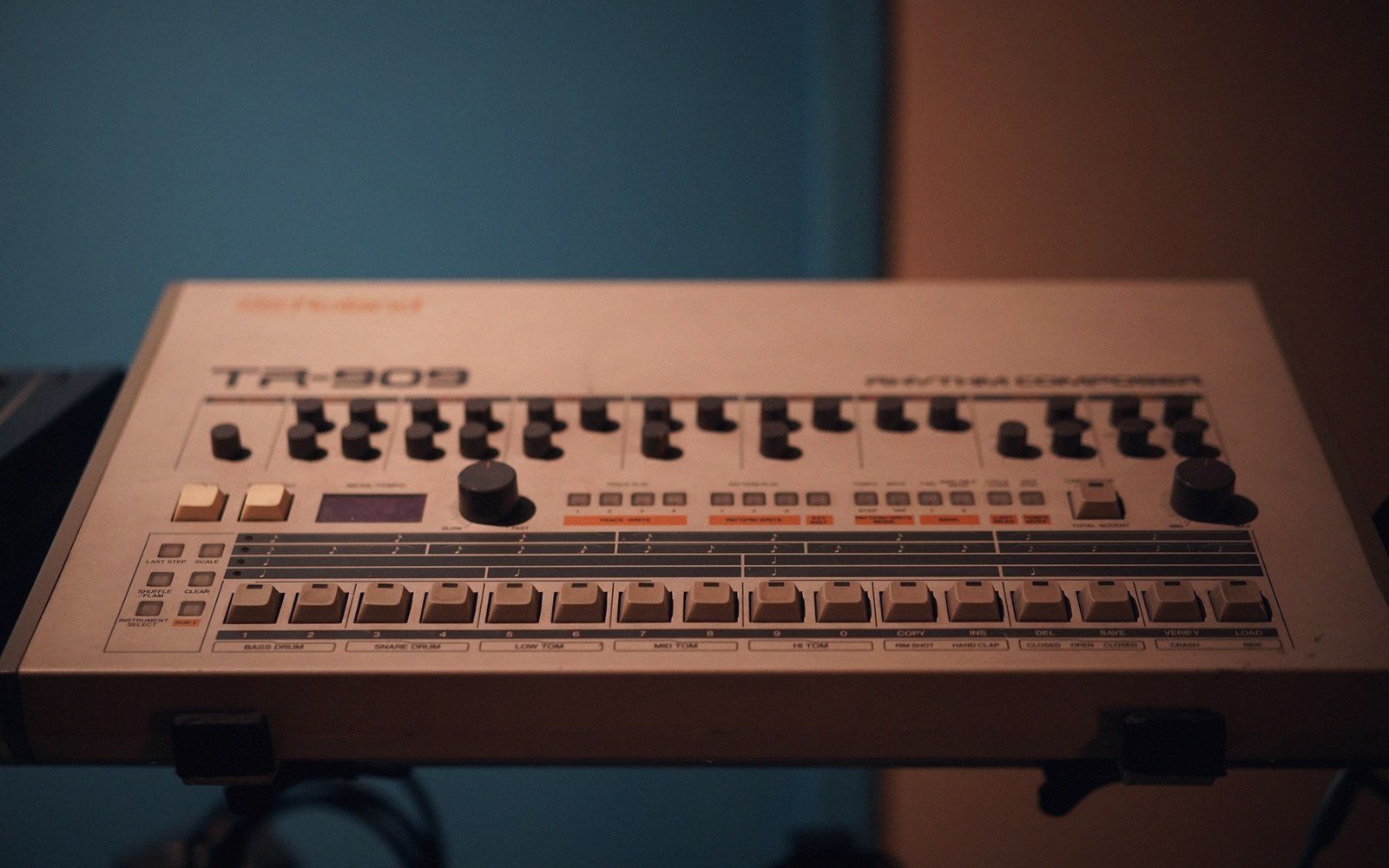
Roland built the 909 clap from three rapid bursts of filtered white noise, each only a few milliseconds apart, followed by a longer decaying tail of the same noise passed through a plate-style reverb circuit. That stutter — noise, silence, noise, silence, noise, then bloom — mimics the imperfect simultaneity of multiple hands clapping. It is entirely analogue; no sample playback is involved.
The reverb tail is the key to the clap's penetration. It sits naturally in the 1 kHz–4 kHz range, which is the frequency band human hearing is most sensitive to, and where most club PA systems have the least physical interference from room resonance and low-frequency bleed. A kick drum owns the sub-bass; a hi-hat lives in the air above 8 kHz. The clap occupies the midrange slot that neither instrument touches, so it does not fight for headroom — it simply fills a gap that was already there.
The envelope is equally responsible. The initial noise burst attacks in under two milliseconds, which is fast enough to register as a transient even on a dancefloor with a three-second reverb tail of its own. The body of the sound then sustains long enough to be heard between the reflections. At higher tempos, the decay is perceived as rhythm rather than blur because the tail is short relative to the beat interval.
Producers working with the 909 in a live context — or sequencing it from a tracker — rarely needed to EQ the clap upward. It arrived already placed where the mix needed it.